
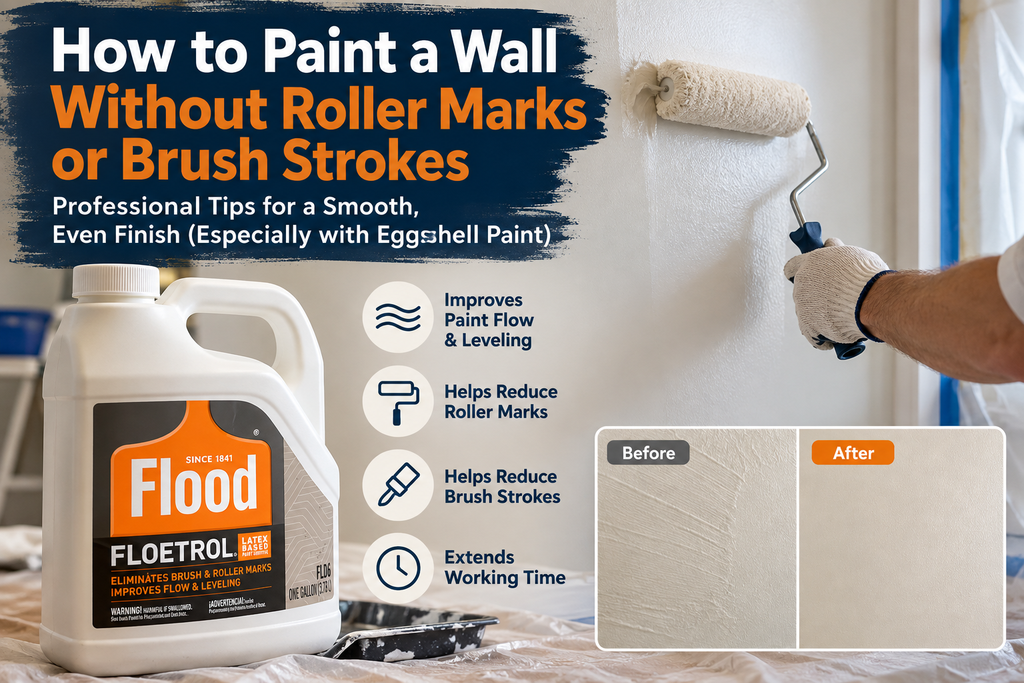
A smooth, professional-looking wall finish isn’t just about choosing good paint. How the paint flows, how quickly it dries, the roller you use, and even the order you paint the wall can make a big difference.
This matters even more with finishes such as eggshell, satin, or semi-gloss. Because these paints reflect more light than flat paint, imperfections such as roller lines, lap marks, and brush strokes can become much more noticeable.
One product that can help in certain situations is FLOOD® FLOETROL® Latex Paint Additive.
Why Eggshell Paint Can Be Difficult to Apply
Eggshell paint is popular because it gives walls a subtle sheen while still looking soft and elegant. It is also more washable than flat paint, making it a common choice for living rooms, hallways, bedrooms, and other high-use areas.
The downside is that eggshell can be less forgiving during application.
If one section of the wall starts drying before you roll the next section, the overlap may remain visible. This is commonly called a lap mark. Uneven roller pressure, repeatedly rolling over paint that has already started drying, or using too little paint can also leave visible roller marks.
That is why maintaining a consistent application technique is especially important with eggshell finishes.
What Is Floetrol?
Floetrol is a latex paint additive designed for water-based and latex paints. According to PPG/Floetrol, it improves paint flow and leveling and can help reduce visible brush and roller marks. PPG Paints
In simple terms, it gives the paint a little more working time and lets it level more smoothly before it dries.
This can be useful when painting:
- Large walls
- Doors and trim
- Cabinets
- Areas where the paint is drying too quickly
- Walls with eggshell or satin finishes where roller marks are more visible
However, Floetrol should not be treated as a substitute for proper painting technique. Always check the instructions for both the paint manufacturer and the additive before mixing products.
How to Reduce Roller Marks on a Wall
First, prepare the wall correctly. Fill nail holes and imperfections, sand rough areas smooth, remove dust, and make sure the surface is clean and dry before painting.
Next, choose the correct roller. For most smooth interior walls, a quality 3/8-inch nap roller is a good starting point. Rougher surfaces may require a thicker nap.
Avoid using a cheap roller cover. A high-quality roller holds more paint and distributes it more evenly across the surface.
Keep a Wet Edge
One of the most important professional painting techniques is maintaining a wet edge.
Don’t finish one small section and let it dry before moving to the next. Instead, continue rolling into the previous section while the paint is still wet.
Maintaining a wet edge helps prevent overlapping areas from drying at different rates and creating visible lap marks. PPG also recommends maintaining a wet edge when trying to avoid lap marks during coating application.
Don’t Overwork the Paint
A very common mistake is continuing to roll the wall after the paint has already started setting.
You may notice a small line and think:
“I’ll just roll over it one more time.”
But once the coating starts to get tacky, touching it again can make the texture worse.
Apply the paint evenly, lightly finish the section, and move on.
Use Consistent Roller Pressure
Pressing harder does not usually improve coverage.
Excessive pressure can squeeze paint out of the roller and leave heavier lines along the edges.
Instead, keep the roller properly loaded with paint and use moderate, consistent pressure.
For the final pass, many painters lightly roll in the same direction from top to bottom. This helps create a more uniform texture across the wall.
Can Floetrol Help With Eggshell Paint?
In the right situation, yes.
Floetrol is designed to improve the flow and leveling characteristics of water-based coatings and reduce brush and roller marks. PPG Paints
That can be especially helpful when paint dries faster than you can maintain a wet edge.
But more additive is not necessarily better.
Too much modification can change how the paint behaves, so follow the product instructions and make sure the paint manufacturer allows additives.
For many modern premium paints, you can also achieve excellent results without additives by using the right roller, proper loading technique, good temperature conditions, and maintaining a wet edge.
A Professional Technique for Smooth Walls
For a typical wall, we recommend working from one side to the other rather than painting random sections.
Cut in around the ceiling, trim, outlets, and corners, then begin rolling while the cut-in areas are still reasonably fresh.
Roll manageable sections of the wall, slightly overlapping the previous wet section.
Avoid stopping in the middle of a large wall whenever possible.
Finally, lightly finish each section using consistent top-to-bottom roller passes.
The goal is to leave the entire wall with the same roller texture.
The Bottom Line
Products like Floetrol can improve paint flow and reduce visible brush and roller marks, especially with water-based coatings. PPG Paints
But the biggest difference comes from technique.
A smooth eggshell finish depends on:
proper surface preparation + a quality roller + enough paint + a wet edge + consistent pressure + avoiding overworking the paint.
When all of these factors work together, the result is a smoother, more uniform wall with fewer visible roller marks and lap lines.
Need a Professional Paint Finish?
At SiaZ, we focus on preparation and application techniques that create cleaner, smoother, and more consistent finishes—not simply putting another coat of paint on the wall.
If you’re planning an interior painting or home improvement project in New Jersey, contact us for an estimate.